Classroom view
One lamp, one beam
Light from a bare lamp spreads in every direction. A Fresnel lens bends that light toward the horizon, where sailors can see it. Try the same lamp with and without the glass.
The mirrors used before this lens lost 60 to 80 percent of the light. A Fresnel lens loses at most 20 percent.
The glass in the middle bends light as it passes through. The triangular prisms above and below bend it and bounce it, so rays heading for the ceiling or the floor are turned out to sea as well.
Some lenses show a steady light all the way around. Others flash: each panel has a bullseye, the whole lens turns, and a ship sees a flash each time a bullseye sweeps past. Keepers wound the clockwork that turned it by hand, every few hours.
Seven sizes
How big is a lens?
Lenses came in sizes called orders. Fresnel’s system ran from first, the largest, to sixth, and a 3½ order was added later between third and fourth. A first-order lens is taller than a person and lit the open coast. A sixth-order lens would fit on a table and lit a harbor. Tap a lens to see its size and which California lighthouses have one.
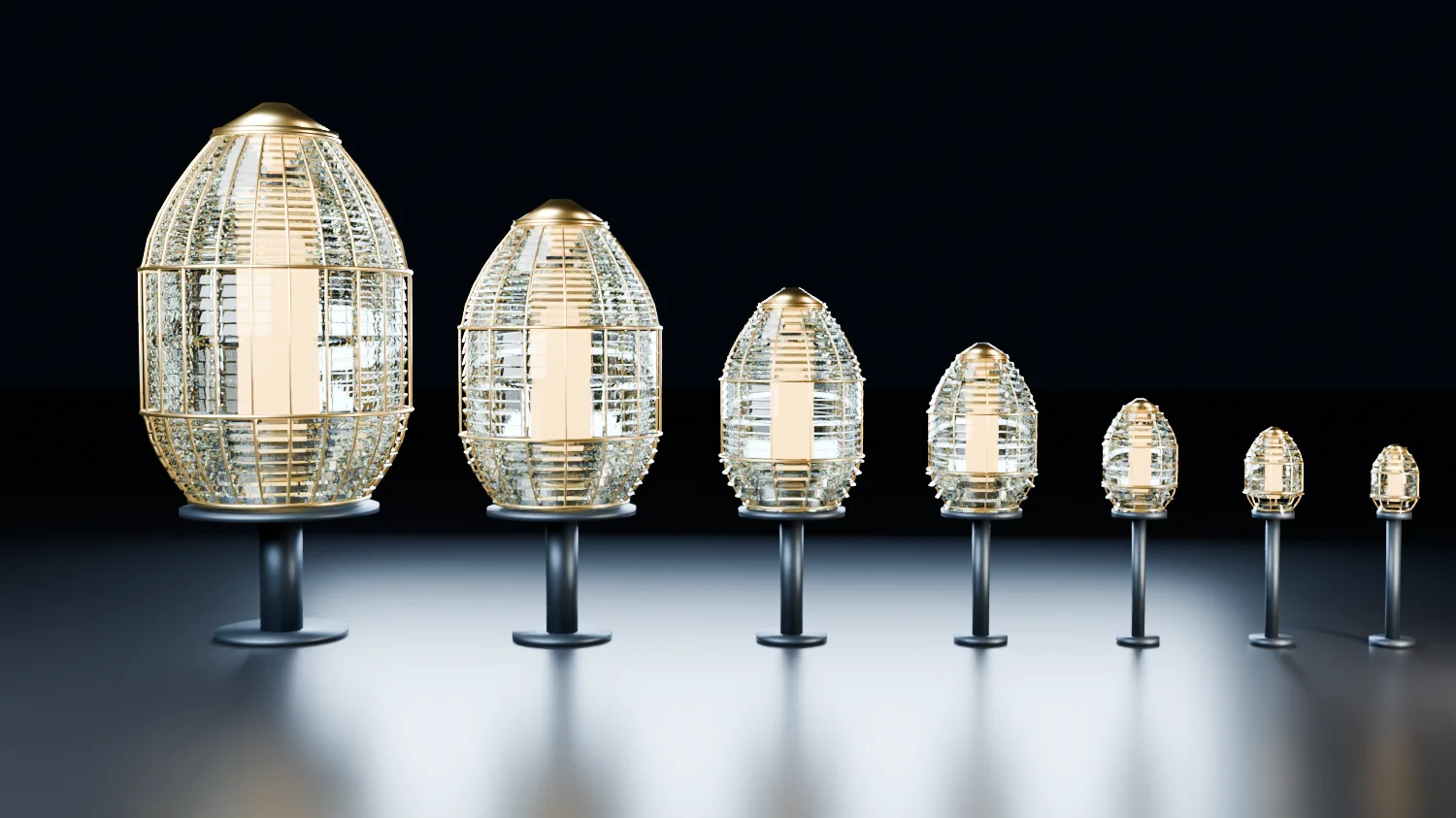
Swipe to see all seven, and tap a lens. Choose a lens. Artist’s model: sizes are to scale from each order’s focal distance, and the prism detail is illustrative.
1st order · about 8.5 ft tall · 6 California lighthouses
1st order
- Height of the glass
- about 8.5 ft (102 in)
- Width inside
- 6.0 ft (1.84 m)
- Built for
- The largest seacoast lights
- Lamp to glass
- 920 mm (36.2 in)
On the California circuit
- Pigeon Point Lighthouse — original lens, on display in the fog signal building
- Point Reyes Lighthouse — original lens, still in place in the lighthouse
- Point Arena Lighthouse — moved to the museum during the 2008–2010 restoration
- Point Sur Light Station — original lens in storage
- St. George Reef Lighthouse — on display at the Del Norte County Historical Society Museum
- Cape Mendocino Light — removed and being restored for display
Point Pinos, Pacific Grove
One lens, five lights
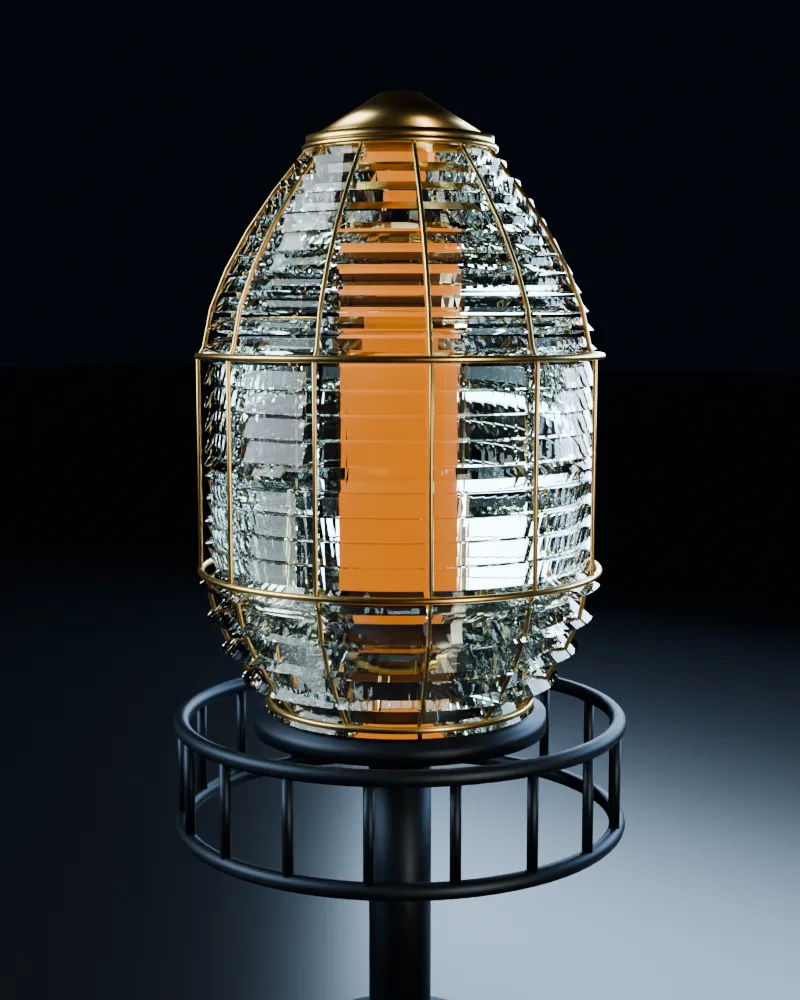
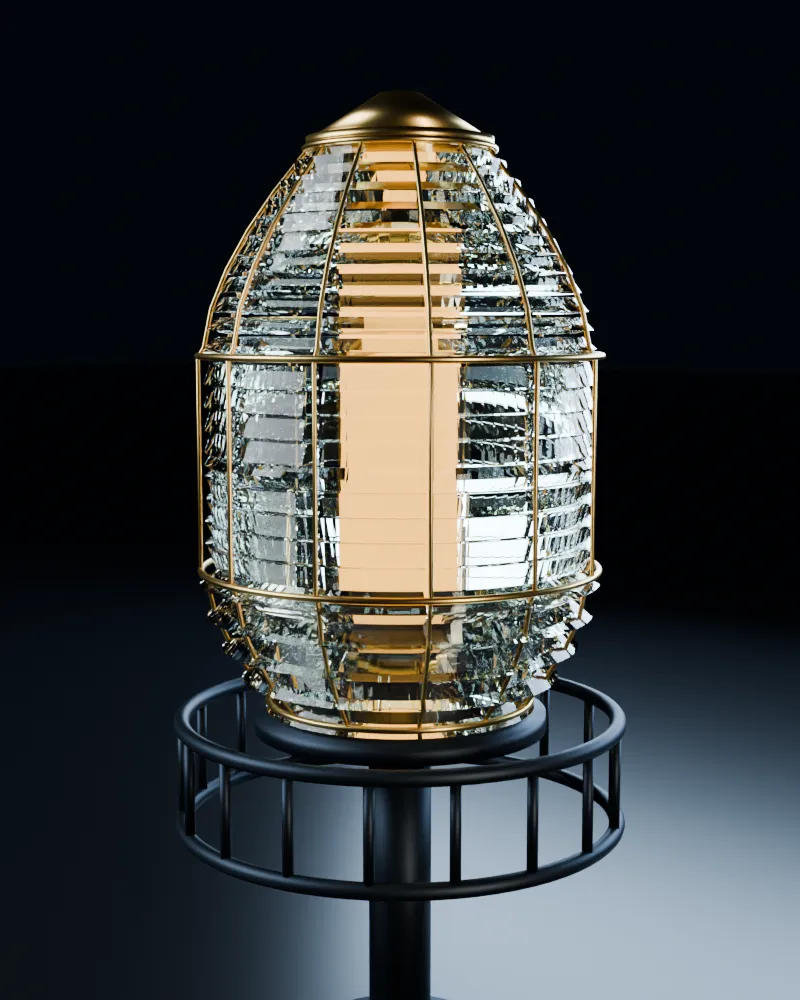
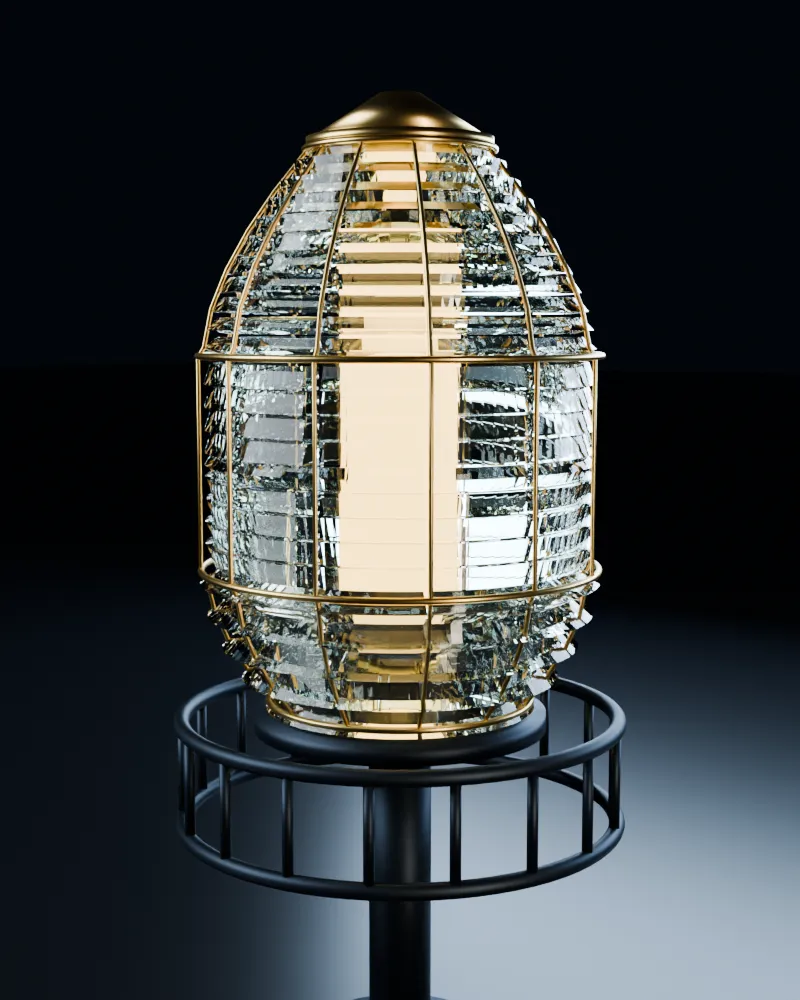
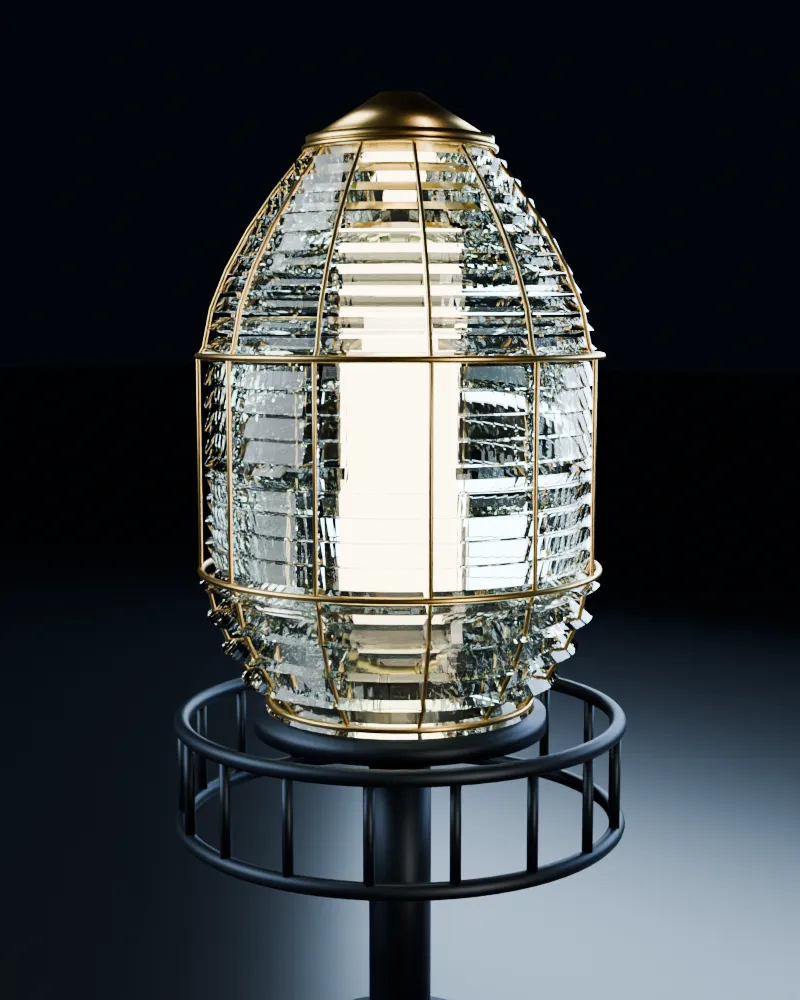
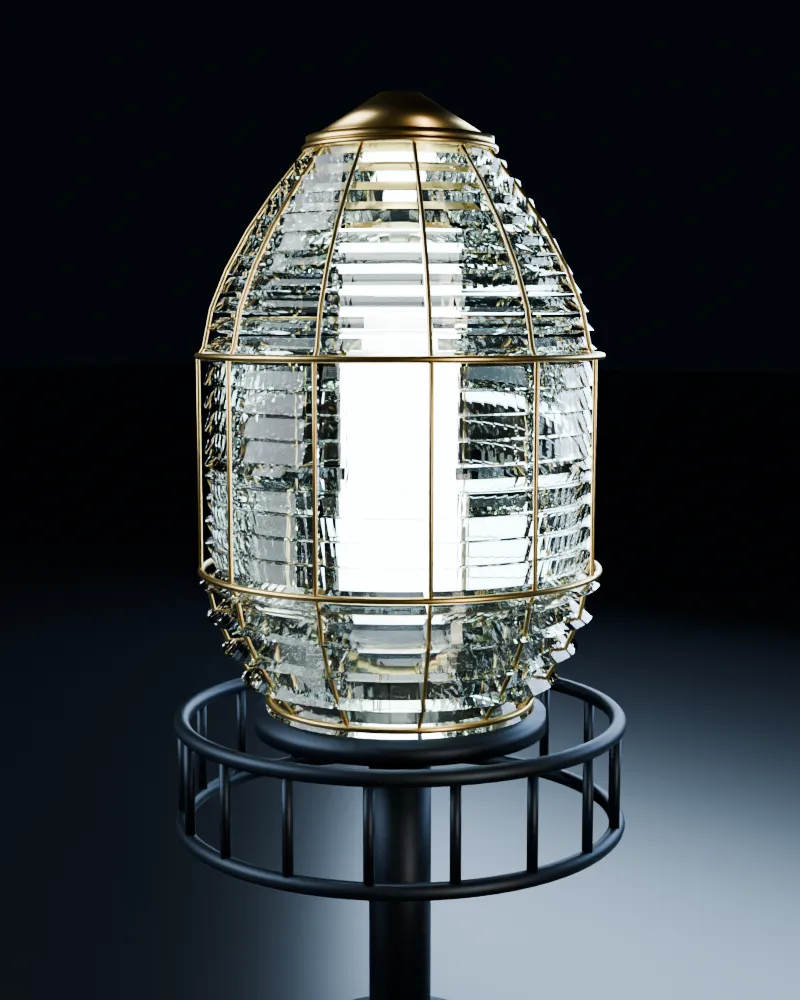
The lens at Point Pinos was made in Paris and has been in the same tower since 1855, longer than any other light on the West Coast. The glass has not changed. The lamp inside it has, again and again.
1855
Whale oil
Point Pinos was first lit on February 1, 1855, burning whale oil. Oil lamps left soot on the glass, and the lens had to be cleaned every day.
Artist’s model of a third-order fixed lens. The color and brightness of each light are an impression, not a measurement.
The Point Pinos team also lists pressurized kerosene, incandescent and halogen lamps along the way. These five are the changes a visitor would have noticed from the shore.