Tier 1
Pigeon Point Lighthouse
Pigeon Point Light Station State Historic Park
Pescadero · San Mateo County · Bay Area / Peninsula
A lens with a life on two coasts, the daily labor of its keepers, and a tower being restored for another generation. The museum brings those stories within reach while the tower remains closed.
Labels
- Tier 1–3
- Editorial browse cues for prominence and context—not circuits, checklists, or achievements.
- Active aid
- The light currently serves navigation. It does not mean the tower, grounds, or interior are open to visitors.
- Public / restricted access
- Some approved visitor access versus a legal viewpoint, special arrangement, or no ordinary public entry. Always check the official guidance.
- Flagship 12
- The curated statewide circuit. It is separate from the editorial tier labels.
Your lighthouse passport
Stamp my passport
Check in at Pigeon Point Lighthouse to collect your digital stamp. Add your name if you like.
Lighthouse Circuit is here to inspire real visits. To collect a location-verified stamp, you’ll need to be at the lighthouse with location access enabled. Need help adding past visits? Email us and we’ll be happy to add them manually.
Your passport is tied to this browser. Open My Passport to back up your personal marks.
The Listening Coast · Arrival story
1:01A Ship, a Tower, a Second Chance
A one-minute field story for Pigeon Point Lighthouse. Listen before the road or when you arrive.
Read transcript
Lighthouse Circuit. The Listening Coast — Pigeon Point Lighthouse. Before this point belonged to a lighthouse, it belonged to a shipwreck. The tower rose one hundred fifteen feet above the San Mateo coast to keep other vessels from repeating that loss. Its first-order Fresnel lens was enormous: sixteen feet tall, six feet across, roughly two thousand pounds, and assembled from more than a thousand prisms. The lens is now displayed at the station, close enough to reveal that a beam once visible miles offshore began as an intricate piece of glasswork. After falling masonry forced the tower to close in 2001, preservation became the station's next navigation problem. A major restoration began in 2024. Pigeon Point is still warning us—this time that landmarks do not preserve themselves.
From the field
Visited recently? Share a condition update for the next visitor.

Inside the museum · Field notes, September 6, 2026
Seventy-two crates. Two oceans. One extraordinary lens.
The glass on display in the fog signal building had a life before Pigeon Point. Getting close to it changes the story of this tall white tower: its most delicate machinery had already crossed an ocean and served another lighthouse.
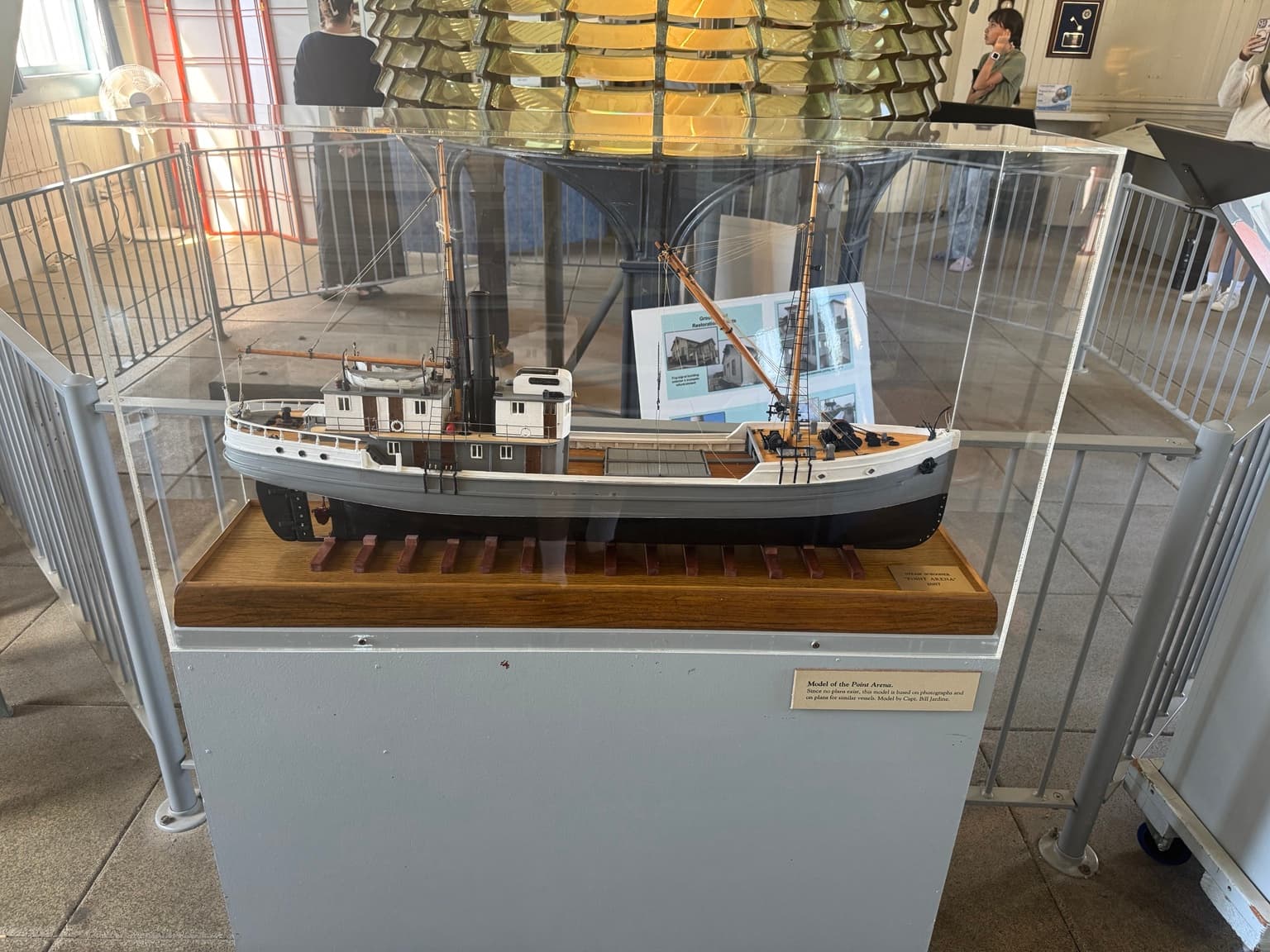
From Cape Hatteras to Cape Horn
The museum’s “Cape Hatteras Connection” exhibit traces the first-order Fresnel lens to Henry-Lepaute in Paris. It served the original Cape Hatteras Lighthouse in North Carolina from 1863 to 1870. When a new tower replaced that lighthouse, the lens went to the Staten Island lighthouse depot.
Then came the Pacific journey: 72 crates carried around Cape Horn to Pigeon Point. The station first lit its lamp on November 15, 1872. Imagine unpacking and assembling that intricate glasswork after a voyage around the southern end of South America.
Another lens, another voyage
Point Pinos has its own Cape Horn story. Its original third-order lens arrived aboard a wooden barque and remains at work there. The two stations share a remarkable shipping route, while each lens has its own history.
Follow the story to Point Pinos →The people behind the beam
The “Wickies” exhibit makes the work tangible: tend the lamp, trim the wicks, polish the glass, keep accounts, and repair what the weather damaged. Keepers also raised vegetables and chickens. The light depended on a household’s daily labor as much as on its ingenious lens.
Look for the staircase
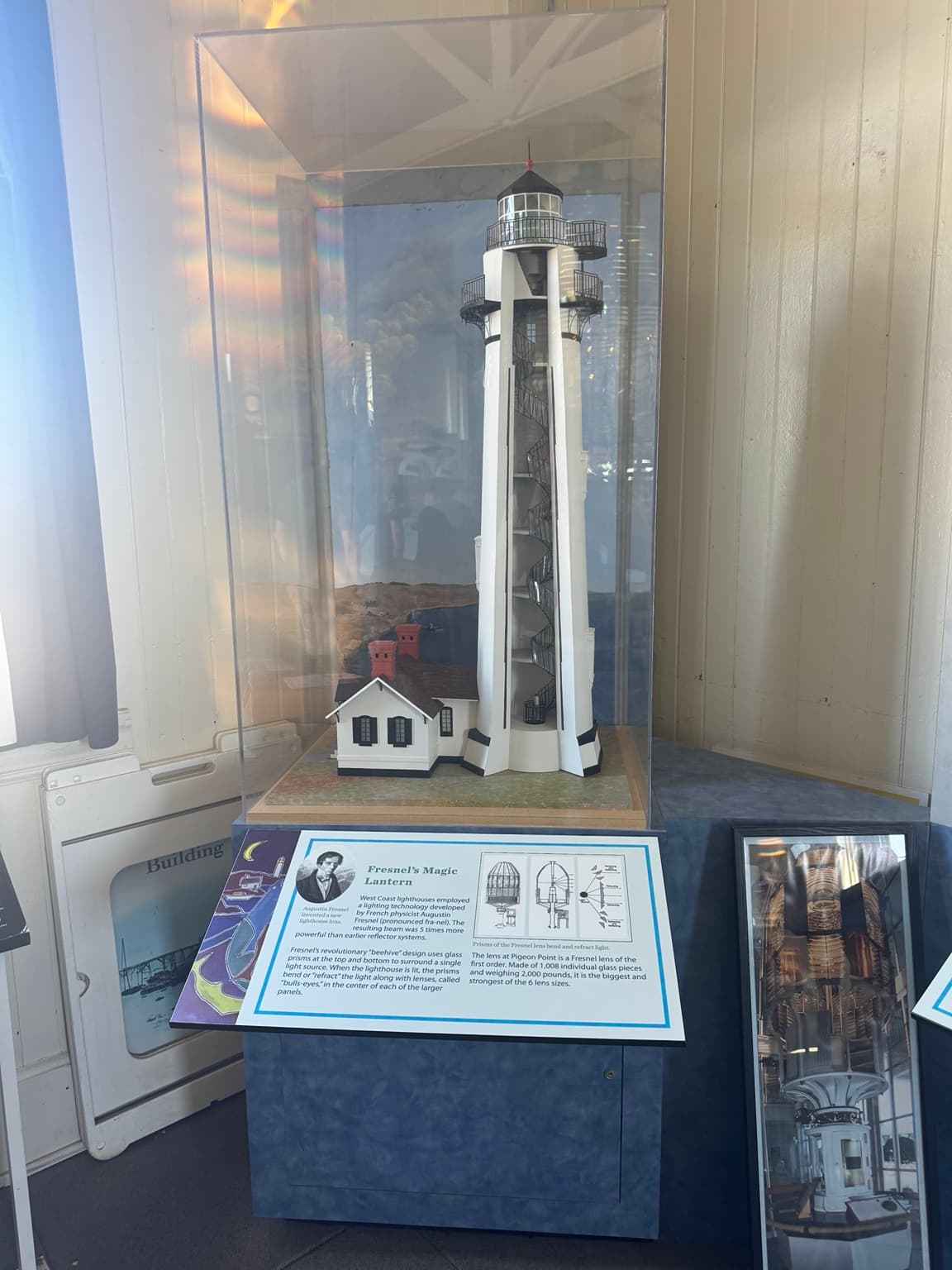
The cutaway model reveals the long climb hidden inside the tower. Nearby, the lens exhibit explains how carefully shaped prisms redirect light into a beam. Its 1,008 glass pieces turn the abstract idea of a lighthouse into something you can examine piece by piece.
A name left by a shipwreck
The Carrier Pigeon wrecked here in 1853, giving the point its name before the lighthouse existed. The museum’s shipwreck exhibits put the station back into a busy, dangerous coastal shipping route.
The lens’s next chapter
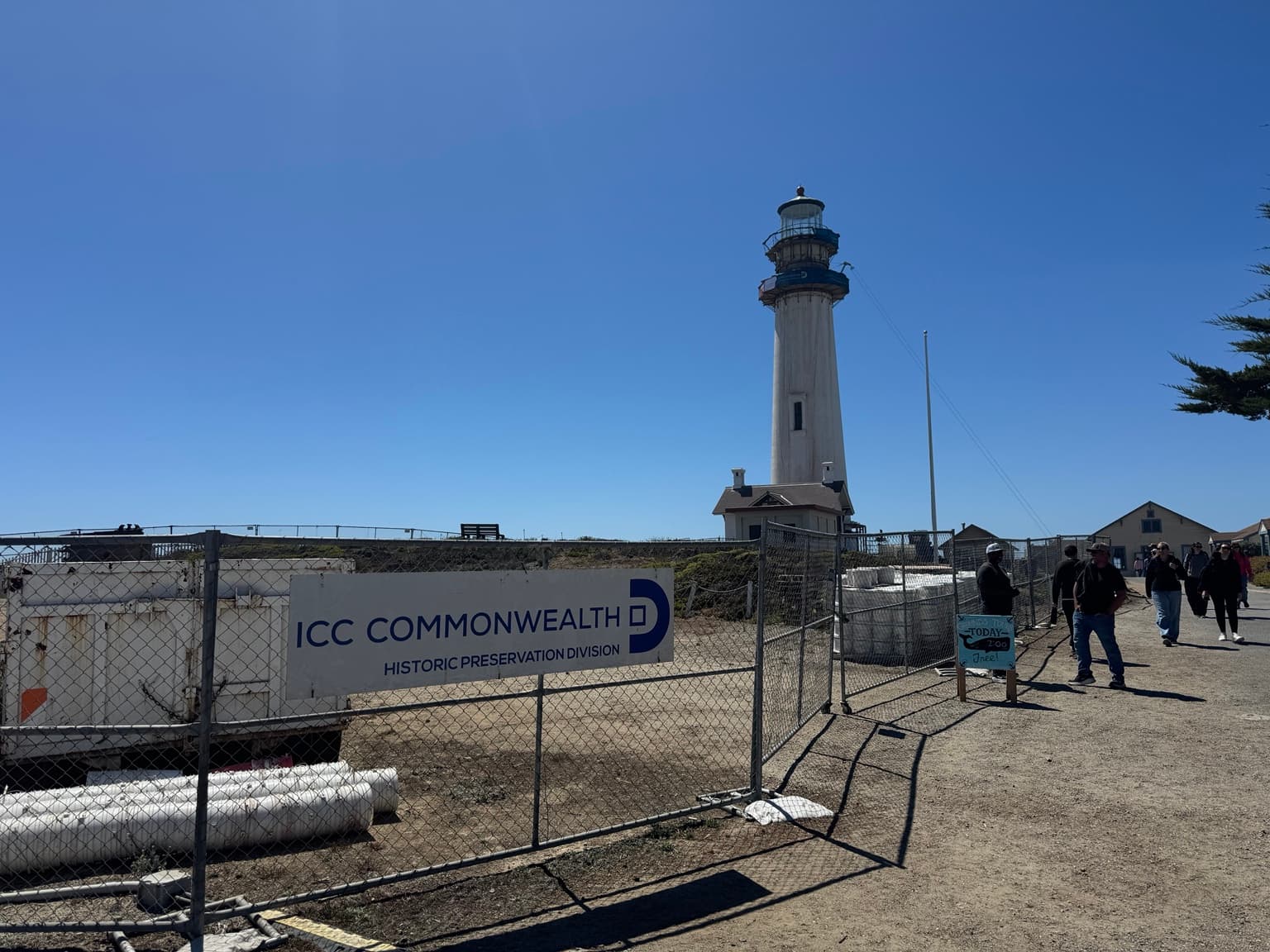
The tower remains closed during restoration. California State Parks Foundation’s April 2026 report anticipates reopening by spring 2027 or sooner; that is a forecast, not a confirmed opening date. It describes restoration of the Fresnel lens as a separate planned project, with the lens eventually returning to the tower for illumination on special occasions. Read the restoration report.
Check the State Parks project updates →Field-note sources & photo credits
Based on Jason La Barbera’s September 6, 2026 photographs of the park’s “Cape Hatteras Connection,” “The Wickies,” Fresnel lens, construction, and shipwreck exhibits. Historical interpretation is paraphrased from the exhibits. The Point Pinos connection is supported by the station’s previously confirmed keeper contribution, including Chris Patton’s correction identifying the vessel as a barque. Photographs © Jason La Barbera; exhibit materials remain credited to their original creators. Restoration information checked September 6, 2026 against the linked State Parks and California State Parks Foundation reports.
⚠ Verify before you drive
Tower restoration and museum exhibits reviewed September 6, 2026. California State Parks Foundation’s April 2026 report forecasts reopening by spring 2027 or sooner; an opening date is not confirmed. Lens restoration and its return to the tower are a separate planned project. Confirm current hours, hostel availability, and navigational beacon status with official sources.
Visit essentials
Access
Current hours
Reservations
Fees
Accessibility
The light
Year first lit
Current structure built
Tower height
Focal plane
Optic
Light characteristic
Stewardship & location
Owner
Manager
Coordinates
National Register
The story
First lit November 15, 1872, the 115-foot tower takes its name from the Carrier Pigeon wreck of 1853. Its first-order Fresnel lens previously served the original Cape Hatteras Lighthouse before traveling to California in 72 crates around Cape Horn.
The visit
Explore the open grounds and fog signal building, where the mounted Fresnel lens, keeper exhibits, shipwreck stories, and tower cutaway model reveal the working station. Tower access remains closed during restoration; reopening is forecast for spring 2027 or sooner, with no confirmed opening date. Check State Parks for current access and walk schedules. The on-site HI Hostel accepts separate overnight reservations.
Make a day of it
Base yourself in
Food / coffee
Stay nearby
Nearby lighthouses

Point Montara Light Station
Montara, Bay Area / Peninsula
On-site hostel makes it a popular overnight destination on the San Mateo coast. Pairs naturally with Pigeon Point for a Peninsula lighthouse overnight.

Año Nuevo Light Station
Pescadero, Bay Area / Peninsula
More famous today for the largest mainland elephant seal rookery in California than for the light station itself — but the ruins read as a clean lesson in what a coastal site looks like when navigation tech moves on and the buildings stay.
Help keep this guide accurate: report changed access, a broken link, or a factual correction.
Sources
- Officialparks.ca.gov
- Officialparks.ca.gov
- Officialcalparks.org/blog/restoring-beacon
- Secondarylighthousefriends.com/light.asp
- Secondaryen.wikipedia.org/wiki/Pigeon_Point_Lighthouse
- Imagescommons.wikimedia.org/wiki/File:Pigeon_Point_Lighthouse.jpg
- Imagesloc.gov/pictures/search
Image rights: CA State Parks images may require permission. Wikimedia Commons has CC-licensed images. HAER/HABS Library of Congress images public domain.
Research confidence: high · Last verified 2026-05-13