The light itself
The Fresnel Lens
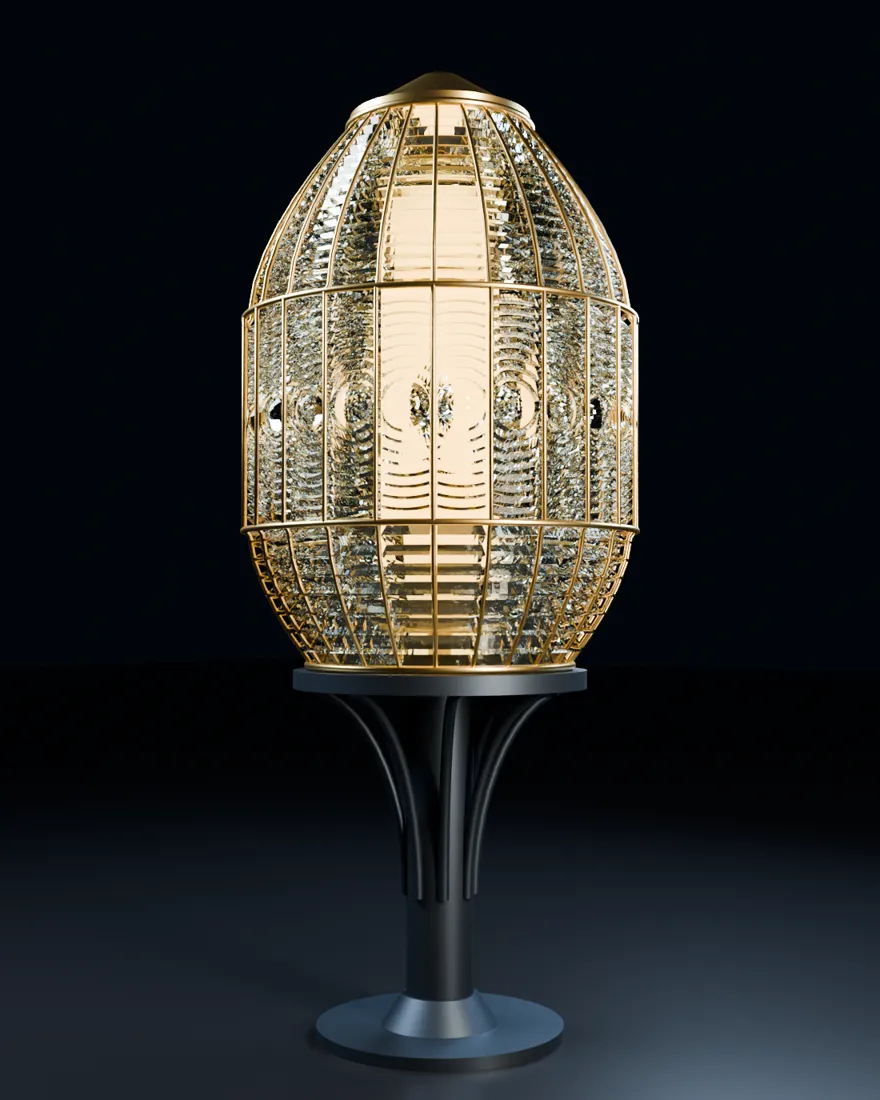
A cage of hand-ground glass that takes one small lamp and throws its light twenty miles out to sea. Many California lighthouses still have theirs.
How it works
One lamp, one beam
A bare lamp throws its light everywhere, and most of it is wasted on the sky and the ground. The mirrors used before this lens lost 60 to 80 percent of the light. A Fresnel lens loses at most 20 percent.
The glass in the middle bends light as it passes through. The triangular prisms above and below bend it and bounce it, so rays heading for the ceiling or the floor are turned out to sea as well.
Some lenses show a steady light all the way round. Others flash: each panel has a bullseye, the whole lens turns, and a ship sees a flash each time a bullseye sweeps past. Keepers wound the clockwork that turned it by hand, every few hours.
How it was made
Built from a thousand pieces
Thin separate prisms waste less light and weigh far less than one thick lens, so every lens was built up from pieces. The big one at Pigeon Point has 1,008 of them, and came to California in 72 crates, by ship around Cape Horn.
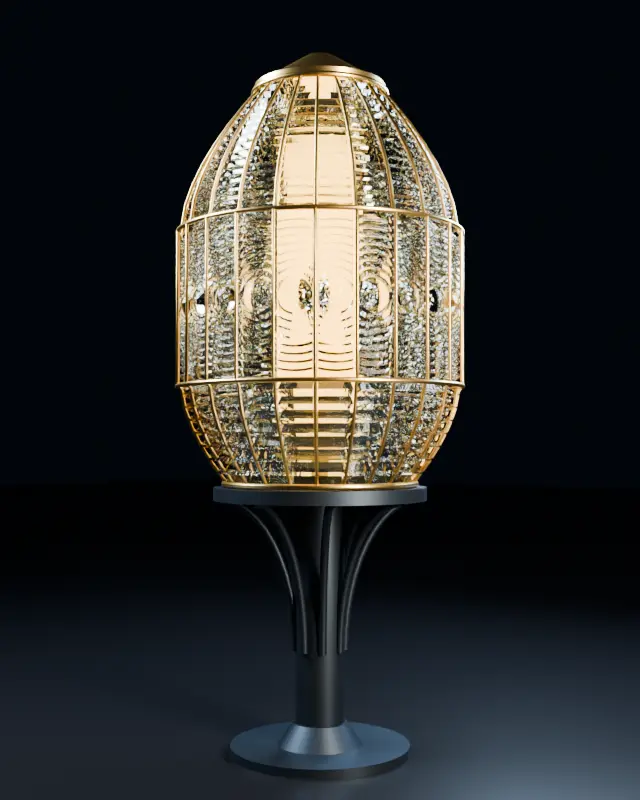
One lamp at the centre. The lens gathers its light into beams.
Artist’s model of a first-order flashing lens. The piece count and the 24 bullseye panels follow Pigeon Point’s lens; the prism shapes and their arrangement are illustrative.
Seven sizes
How big is a lens?
Lenses came in sizes called orders. Fresnel’s system ran from first, the largest, to sixth, and a 3½ order was added later between third and fourth. A first-order lens is taller than a person and lit the open coast. A sixth-order lens would fit on a table and lit a harbor. Tap a lens to see its size and which California lighthouses have one.
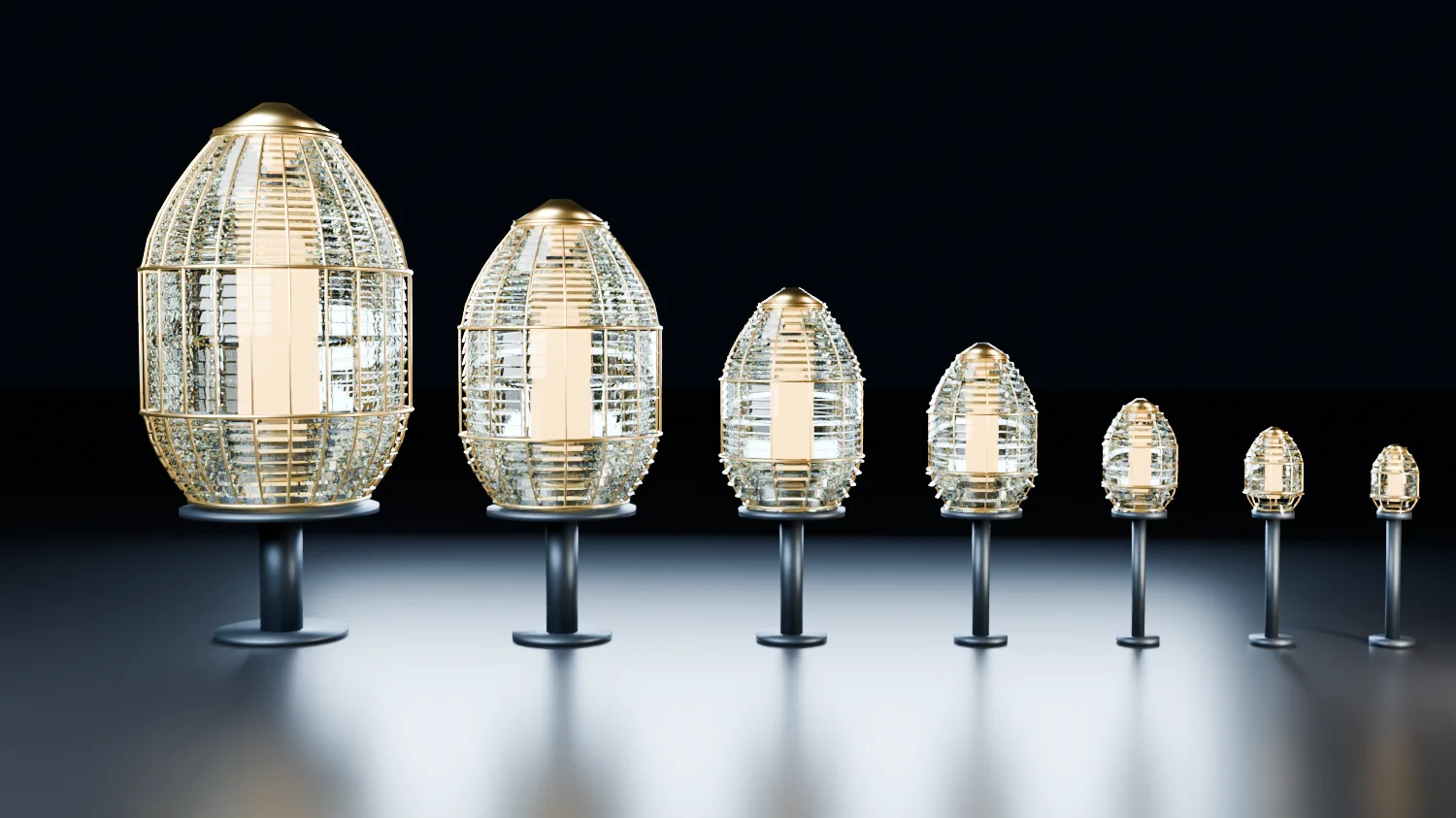
Swipe to see all seven, and tap a lens. Choose a lens. Artist’s model: sizes are to scale from each order’s focal distance, and the prism detail is illustrative.
1st order · about 8.5 ft tall · 6 California lighthouses
1st order
- Height of the glass
- about 8.5 ft (102 in)
- Width inside
- 6.0 ft (1.84 m)
- Built for
- The largest seacoast lights
- Lamp to glass
- 920 mm (36.2 in)
On the California circuit
- Pigeon Point Lighthouse — original lens, on display in the fog signal building
- Point Reyes Lighthouse — original lens, still in place in the lighthouse
- Point Arena Lighthouse — moved to the museum during the 2008–2010 restoration
- Point Sur Light Station — original lens in storage
- St. George Reef Lighthouse — on display at the Del Norte County Historical Society Museum
- Cape Mendocino Light — removed and being restored for display
Point Pinos, Pacific Grove
One lens, five lights
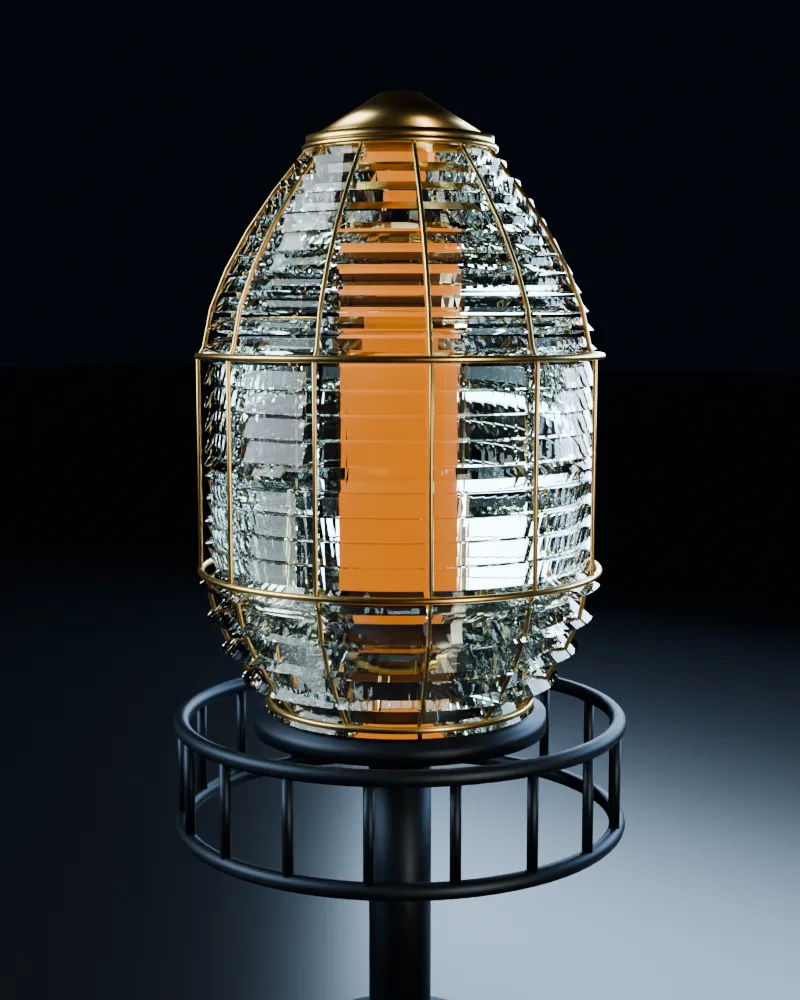
The lens at Point Pinos was made in Paris and has been in the same tower since 1855, longer than any other light on the West Coast. The glass has not changed. The lamp inside it has, again and again.
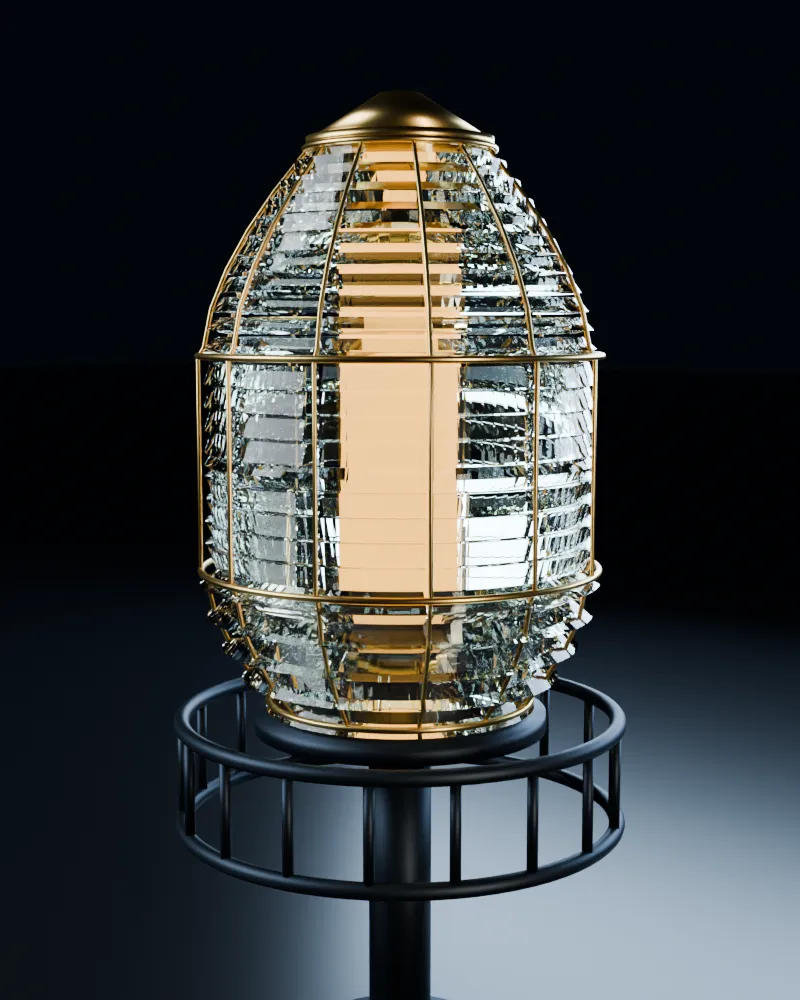
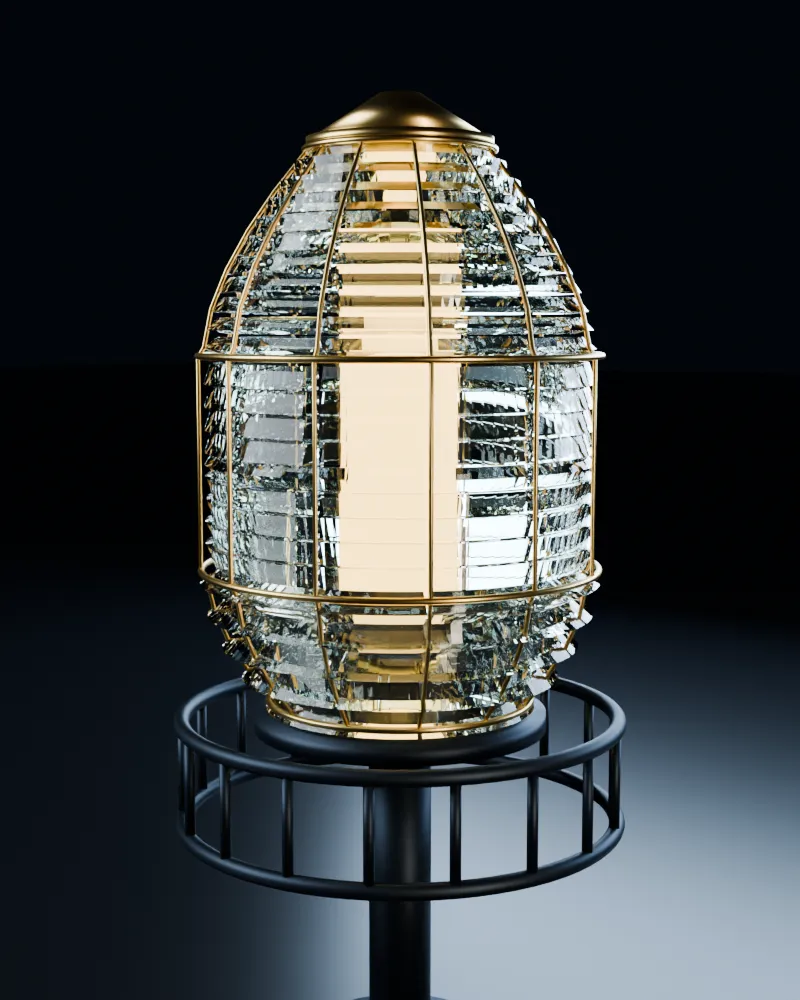
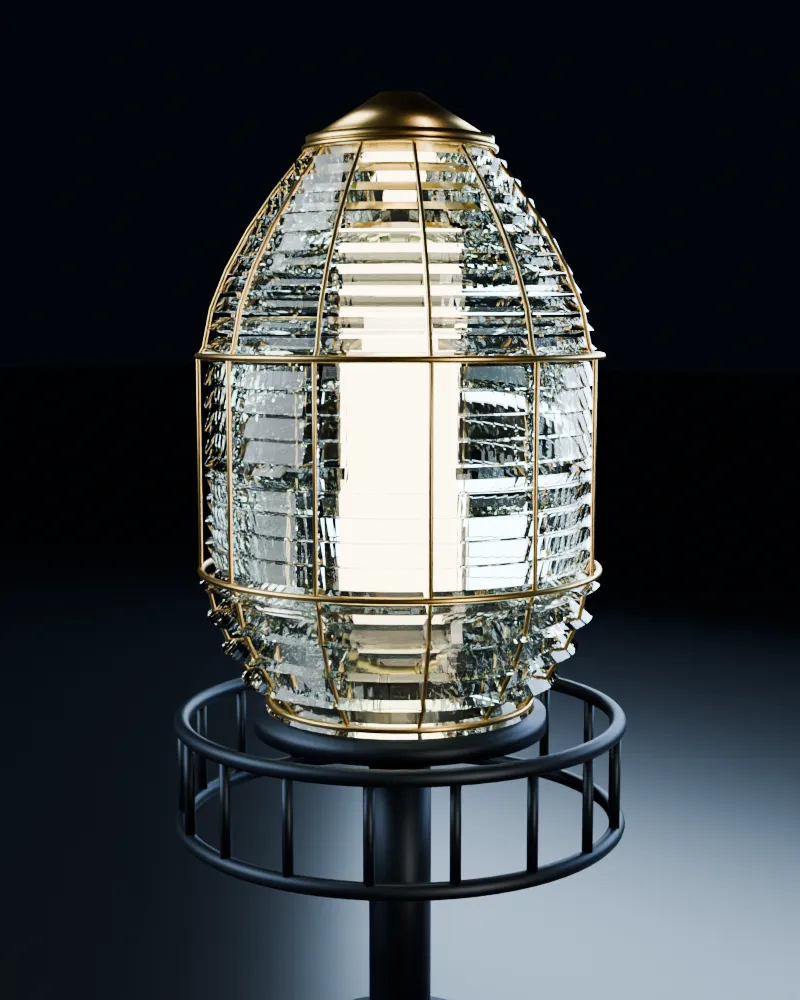
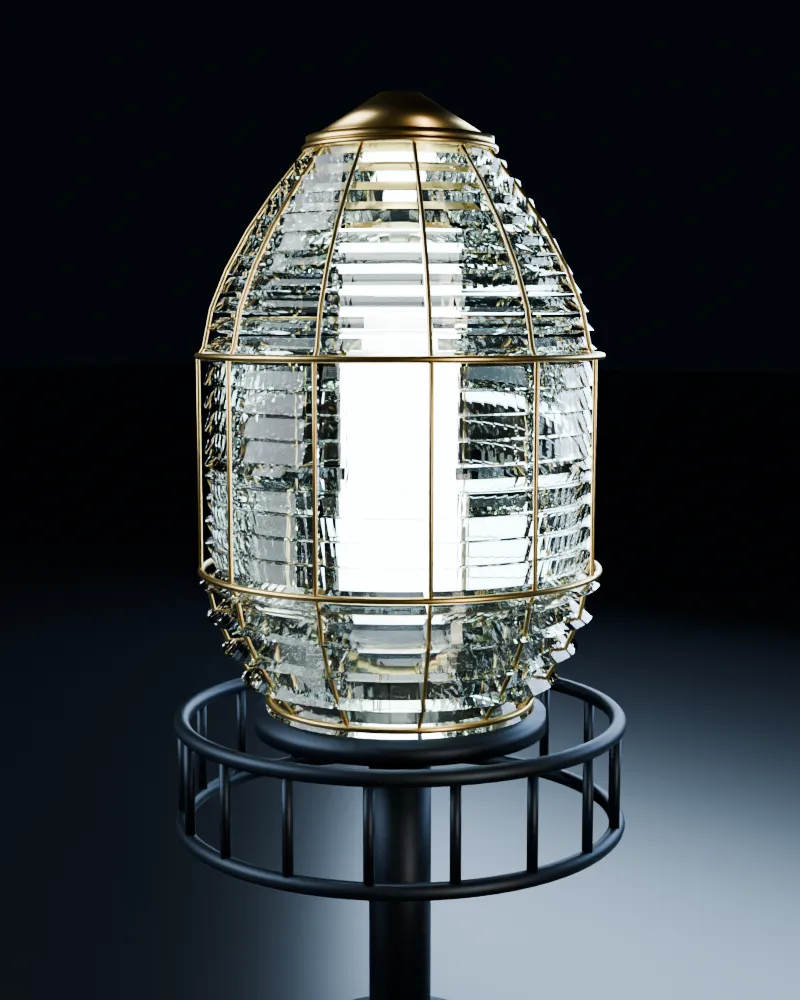
1855
Whale oil
Point Pinos was first lit on February 1, 1855, burning whale oil. Oil lamps left soot on the glass, and the lens had to be cleaned every day.
Artist’s model of a third-order fixed lens. The colour and brightness of each light are an impression, not a measurement.
The Point Pinos team also lists pressurized kerosene, incandescent and halogen lamps along the way. These five are the changes a visitor would have noticed from the shore.
Go and look
See one in person
A photograph does not prepare you for standing next to one. These six have a lens you can walk up to. Check each page for current hours before you go.
- Point PinosThird order. The original 1855 lens, still the working light.
- Point CabrilloThird order. Still active, and the lens still turns.
- Pigeon PointFirst order. On display at eye level in the fog signal building.
- Point ArenaFirst order. 258 hand-ground prisms in 24 bronze frames, in the museum beside the tower.
- Old Point LomaThird order. On display inside the tower.
- Point FerminFourth order. The original lens, on display inside.
History
From France to California
- 1819Augustin-Jean Fresnel, a French engineer, joins his government's lighthouse commission. He proposes replacing metal mirrors and their many small lamps with glass lenses around one large lamp.
- 1823His first lens goes into the Cordouan lighthouse on the French coast: eight bullseye panels turning around a single lamp.
- 1838A Paris clockmaker, Augustin Henry, opens a lens works later named Henry-Lepaute. It made the lenses at Point Pinos and Pigeon Point.
- 1841The first Fresnel lenses in the United States go in at Navesink, New Jersey. For years the official in charge of American lighthouses had turned them down as too expensive.
- 1852A new Lighthouse Board starts replacing mirrors with lenses across the country, and the contract for the first eight West Coast lighthouses is changed to use them.
- 1854–55The West Coast lights up. Alcatraz is established in 1854, Point Pinos is lit on February 1, 1855, and Point Loma follows on November 15.
- 1877–85Kerosene replaces lard oil in lighthouses nationwide. Electricity begins to follow from 1898.
- TodayA 2001 survey counted more than 400 of these lenses surviving in the United States. At least 75 were still working in 2025.
Sources
Sizes, dates and counts on this page come from the sources below. The lens images are artist’s models built for this guide, not surveys of the real optics. Lighthouse lens details come from each lighthouse’s own page here.
Show all 23 sources
- U.S. Lighthouse Society: Fresnel lens orders, sizes, weights, quantities and costs
- U.S. Lighthouse Society: The Fresnel lens (Thomas Tag)
- U.S. Lighthouse Society: Chronology of the development of the Fresnel lens
- U.S. Lighthouse Society: Fresnel lens makers
- U.S. Lighthouse Society: Lighthouse lamps through time
- U.S. Lighthouse Society: Fresnel lenses and the 2001 lens survey
- U.S. Lighthouse Society: Wayne Wheeler on the Lighthouse Board and the West Coast lights
- National Park Service: The Fresnel lens
- National Park Service, Cape Hatteras: Fresnel lens
- National Park Service: The lighthouses of Cabrillo National Monument
- Encyclopaedia Britannica: Augustin-Jean Fresnel
- Smithsonian Magazine: Science makes a better lighthouse lens
- U.S. Coast Guard Historian's Office: Alcatraz Island Light
- Point Pinos Lighthouse: visitor guide, signs and timeline
- Lighthousefriends: Point Pinos Lighthouse (kerosene in 1883)
- Historic American Engineering Record, National Park Service: Fresnel Orders, HAER RI-27 sheet 8 of 12, delineated by Mabel A. Baiges, 1988 (what each order was used for)
- Point Arena Lighthouse Keepers, Inc.: details of the Point Arena lens
- U.S. Lighthouse Society: lens sizes, weights and numbers built, including the 3½ order
- National Park Service: lighthouse context study (where the 3½ order was used)
- U.S. Coast Guard Historian's Office: Table Bluff Lighthouse (3½-order lens installed in 1953)
- Point San Luis Lighthouse Keepers: Horn House and lens
- Wikipedia: Point Pinos Lighthouse (kerosene in 1880)
- Mason County Press: classical lenses still operating in 2025